Showing posts with label pollution. Show all posts
Showing posts with label pollution. Show all posts
Sunday, July 3, 2016
24 Gas Wells Unanimously Approved Near Bella Elementary
Below is the full text of the Greeley Tribune article, with interesting parts emphasized in red and my comments added in orange.
County commissioners approve Extraction Oil and Gas project near Bella Romero Academy
Sidewalk or no sidewalk? Bella Romero Academy’s lack of sidewalks have been a hot-button issue for years. When the school went up in 2003, the city of Greeley, Greeley-Evans School District 6 and Weld County officials all took notice. Each agency believed another one was responsible for building a sidewalk. The school is just outside Greeley city limits. During a meeting last week, school board officials decided to ask the commissioners to require Extraction Oil and Gas to build a sidewalk while building a nearby oil and gas project. That didn’t go through. One county commissioner said she wouldn’t consider it. Commissioner Barbara Kirkmeyer reminded residents that Weld County attempted to seek a federal grant to build the sidewalk, but no one would pitch in for the funding match. “We were told ‘no’ by the city of Greeley and ‘no’ by the school district,” she sad. “I think they chose to neglect and do nothing for their students.” [What about all that oil revenue for the county and the city? Can some of that not be used to make a sidewalk? What about the oil companies' PR slogan that they want to be a good neighbor? Why would they not volunteer paying for the sidewalk?]
Residents trickled out of the hearing room rolling their eyes and shaking their heads in disappointment as Weld County leaders loudly lauded the oil and gas industry Wednesday. “We don’t have a democracy,” Greeley resident Maydean Worley told the board before she walked out of the ongoing meeting that drew about 100 residents to discuss a planned 24-well oil and gas structure that Extraction Oil and Gas had proposed in east Greeley. Commissioners thanked the industry for lifting its residents out of poverty and providing a brighter economic future for its workers.
Everyone was gathered at the Weld County administration building, 1150 O St., for a hearing on another contested urban oil and gas project. Extraction officials sought a special use permit that would allow the company to build a 24-well pad east of Greeley, near Bella Romero Academy 4-8 Campus, 1400 E. 20th St. The commissioners unanimously approved it. Extraction will build up to 24 wells on the northeast corner of Cherry Avenue and 24th Street. Because of its access to both oil and natural gas pipeline, electricity and air quality technology, it will be one of the safest sites in the country, said Blane Thingelstad, a petroleum engineer for the company.
Before the public comment session began, Chairman Mike Freeman urged speakers to stay on task, focusing on this specific project. Often, even during this meeting, speakers on both sides got caught up in general energy policy arguments. This is a land use hearing, so instead of enacting new laws, all commissioners do is decide whether the project is appropriate for the area. Nearby resident Barbara Flores pointed to her house on a projected map, showing how close it is to the project site. “I am definitely affected by this monstrosity,” she said.
Residents lamented the project for a multitude of reasons: health risks, especially for nearby school children, pollution and truck traffic. “As a teacher, this bothers me,” said Therese Gilbert, who teaches at Heath Middle School, 2223 16th St. in Greeley. Children’s bodies are still developing, and that makes their lungs and other organs more sensitive to pollution, she said. There are already eight wells in the area, and the project would only bring more. “This would make it 32 within 1,500 feet,” she said. “That is not OK to have that close to kids.”
Anne Curry-Sanchez, another Greeley resident, pointed out that although the school building is 1,300 feet from the well site, a playground is only about 500 feet away. The state in recent years bolstered its setback requirements, requiring oil and gas activity to be no closer to high-occupancy structures than 1,000 feet; oil and gas structures must be 500 feet away from low-occupancy structures, such as homes.
Wendy Highby is a co-founder of Weld Air and Water, an anti-oil and gas advocacy group for the county. She said weather will affect the levels of pollution near the school, and some days will be worse than others. “Like we have snow days, we would (need to) have high pollution days,” she said. “We are ignoring the public health risks.” It’s tough to pollute areas around here because of the state’s strict environmental regulations, Thingelstad said. “Colorado has some of the best air quality standards in the nation,” he said.
[I guess Thinglestad is not aware that elevated ozone levels are now the norm here? Access the information at the website of the Colorado Department for Public Health & Environment.It even has this real-time ozone monitoring map
Most residents raised another concern about the location: the streets. They’re worried about having heavy-duty trucks on the roads in the area during constructions and drilling. Not only do they lack sidewalks for Bella Romero students, they’re in bad shape. Alan Herman, who said he worked for the city of Evans in the streets department, lives in the neighborhood. “That road’s not anywhere close to any road standards,” he said. Cars almost have to drive off the pavement to make way for oncoming traffic in some areas.
Thinglestad touted many of the site’s features he said go above and beyond those regulations: advanced technology that catches any escaping vapors, cell phone apps that let rig operators know in real time if there’s a problem, thicker sound walls and electric access, which cuts the need for loud, diesel-running drilling rigs. “Noise, emissions, diesel traffic … has been mitigated here,” he said.
Worley was one of the residents who veered into overarching energy policy. “Everyone in Weld County has these chemicals in their body,” she told the board. She called it a case of social and environmental injustice. After many residents showed their anger and disappointment with the board — some with facial expressions, some with snarky remarks — after the public hearing session, the commissioners went off task, as well.
Commissioner Julie Cozad talked about the perceived battle between protection of nature and oil and gas projects. “My degree is in biology and chemistry,” she said. “I study these issues. I think there is a way for industry to coexist.” Many commissioners responded to accusations such as, “You wouldn’t want this in your community.” Three of the five commissioners said they do have oil and gas in their communities. “There’s been no less than 10 rigs in my area,” Commissioner Barbara Kirkmeyer said.
You can contact the commissioners here: Meet the Commissioners

Thursday, January 28, 2016
Why Even Let Citizens Speak?
It is so sad that it all falls on, clearly willfully, deaf ears! I would hope that a thousand Debra Figueroas, and other concerned and impassioned residents, could make a difference in the decision making process regarding fracking, but I think the game is rigged (pun intended) against the common people. But, at least none of the commissioners can wash their hands in innocence, although they'd like to!
They can not say, like many German people in WWII did, when questioned about the concentration camps, "Wir haben es nicht gewusst", which means "We didn't know". Well, many surely had an uneasy feeling about it, but willfully pushed that thought away, willfully chose to stay ignorant, but that did not change the reality and the facts. Nor can the commissioners (and all others who ignore concerns and pleas of the people they are supposed to serve) claim they didn't know of the dangers and health risks of fracking! They have been informed over and over again, but it falls on willfully deaf ears!
I commend all the residents who go to these meetings to speak out, even if it has no immediate effect. All they will ever hear is an insincere "Thank you very much", and then get to witness the authoritarian, unanimous vote against what they seek. There's nothing democratic about unanimity!
But, the more elected officials get confronted with concerns, the harder it will prove for their conscience to ignore those, that is...if they have a conscience. After all, is it not unconscionable to allow oil and gas pads near home and schools?
----------------------------------------------------------------------------------------------------
Watch Debra Figueroa address Adams County commissioners about a fracking moratorium:
Click on the video below and go to 5:41:30
Hear Phil Doe speak at 5:52:00
Sadly, the reality is this, and it plays out over and over again to the frustration of all who come before boards or councils to 'petition', or share their grievances.
They can not say, like many German people in WWII did, when questioned about the concentration camps, "Wir haben es nicht gewusst", which means "We didn't know". Well, many surely had an uneasy feeling about it, but willfully pushed that thought away, willfully chose to stay ignorant, but that did not change the reality and the facts. Nor can the commissioners (and all others who ignore concerns and pleas of the people they are supposed to serve) claim they didn't know of the dangers and health risks of fracking! They have been informed over and over again, but it falls on willfully deaf ears!
I commend all the residents who go to these meetings to speak out, even if it has no immediate effect. All they will ever hear is an insincere "Thank you very much", and then get to witness the authoritarian, unanimous vote against what they seek. There's nothing democratic about unanimity!
But, the more elected officials get confronted with concerns, the harder it will prove for their conscience to ignore those, that is...if they have a conscience. After all, is it not unconscionable to allow oil and gas pads near home and schools?
----------------------------------------------------------------------------------------------------
Watch Debra Figueroa address Adams County commissioners about a fracking moratorium:
Click on the video below and go to 5:41:30
"Your real investment are your children. If you do not have an educated, healthy society, you can't have the other things. So you can't have economic development if your people are sick and stupid."
"I have been listening to it all, but it is greed what I hear. We talk about, "Let's demand real science! Where is it? We have it, but you don't want to listen to it!"
Hear Phil Doe speak at 5:52:00
"If you look at the bill of rights, it says all government is derived from the people, is instituted wholly for the good of all."
Sadly, the reality is this, and it plays out over and over again to the frustration of all who come before boards or councils to 'petition', or share their grievances.
“[N]othing in the First Amendment or in this Court’s case law interpreting it suggests that the rights to speak, associate, and petition require government policymakers to listen or respond to individuals’ communications on public issues."See: http://www.firstamendmentcenter.org/petition-overview
Friday, October 2, 2015
Volunteers Sought for Quality of Life Study
Researchers at the University of Colorado are looking for volunteers to participate in a study on how people respond to oil and gas development in their communities.
 "Your participation should take no more than 1 hour at a time for up to 6 visits to our office in Greeley over a 6-9 month period.
During the office visits, we will ask questions about your health, collect height and weight data, measure blood pressure and blood vessel health, collect a blood sample, collect a small hair sample, and collect cheek cells from the inside of your mouth with a swab.
"Your participation should take no more than 1 hour at a time for up to 6 visits to our office in Greeley over a 6-9 month period.
During the office visits, we will ask questions about your health, collect height and weight data, measure blood pressure and blood vessel health, collect a blood sample, collect a small hair sample, and collect cheek cells from the inside of your mouth with a swab.
You will be compensated with a $30.00 Visa gift card for each visit completed. In order to qualify for this study you must meet the following criteria:
If you would like to participate in this study, or have any questions, call 970-829-7490 or email lindsay.taylor@ucdenver.edu
Project Title: QBC Study: Quality of Life and Biomarkers in Communities
Principal Investigator: John Adgate PhD, MSPH
Version Date: 8/12/15

You will be compensated with a $30.00 Visa gift card for each visit completed. In order to qualify for this study you must meet the following criteria:
18 years old or older
live within 2 miles of an oil or gas well
be a non-smoker (tobacco and marijuana)
cannot live with anyone who regularly smokes in your home
cannot be pregnant
cannot have a history of diabetes, chronic obstructive pulmonary disease, or chronic inflammatory diseases
cannot be taking statins or any anti-inflammatory medications
cannot be regularly exposed dust, fumes, or solvents
If you would like to participate in this study, or have any questions, call 970-829-7490 or email lindsay.taylor@ucdenver.edu
Project Title: QBC Study: Quality of Life and Biomarkers in Communities
Principal Investigator: John Adgate PhD, MSPH
Version Date: 8/12/15
Wednesday, May 20, 2015
Drilling in Evans Neighborhood
Noble Energy and other oil companies want people to believe they are caring stewards of the environment, as shown in this video. But how caring are they when they drill smack in the middle of this Evans, CO neighborhood, just 100 feet from the closest home, and 1,000 feet from Ann Heiman Elementary School? (Scroll down for photos)
 I doubt the people who live there knew that would be a possibility, because a well head existed before they moved in. Few people realize that putting in a new well is not the end of drilling. Often wells need to be stimulated into producing again with hazardous substances like hydrochloric and hydrofluoric acid; chemicals you do not want in your neighborhood! Plus, there is the danger of a blowout .
Of note too is this
Toxic vapors suspected in deaths of three Colorado oil and gas workers
The article stays mum on the likelihood that those deaths might be caused by dangerous hydrogen sulfide that can kill within minutes.

What happens when that gas escapes in large quantities? What if such a well has a blowout such as the one in China in 2003 that killed more than 200 people and hospitalized 4,000! See:
Tragedy of errors in Chongqing's gas blowout
And this!
Children can suffer DNA damage and illness from leaking sour gas several kilometres away, yet B.C. allows wells within 150 metres of schools
It is appalling and beyond the pale, especially when more and more findings show that less lethal gases that escape are really hazardous to people's health as well!


Noble Energy "Community Gardening" TV Commercial

Of note too is this
Toxic vapors suspected in deaths of three Colorado oil and gas workers
The article stays mum on the likelihood that those deaths might be caused by dangerous hydrogen sulfide that can kill within minutes.

What happens when that gas escapes in large quantities? What if such a well has a blowout such as the one in China in 2003 that killed more than 200 people and hospitalized 4,000! See:
Tragedy of errors in Chongqing's gas blowout
And this!
Children can suffer DNA damage and illness from leaking sour gas several kilometres away, yet B.C. allows wells within 150 metres of schools
It is appalling and beyond the pale, especially when more and more findings show that less lethal gases that escape are really hazardous to people's health as well!
Fracking may affect air quality, human health "People living or working near active natural gas wells may be exposed to certain pollutants at higher levels than the Environmental Protection Agency considers safe for lifetime exposure. Air pollution from fracking operations may pose an under-recognized health hazard to people living near them, the researchers concluded."(Photos: Robert Winkler)


 |
| West of 35th ave and north of 37th st, Evans. |
Friday, October 17, 2014
Few People Choose Clear Conscience over Greed
Alice Zinnes from Pennsylvania is one of disturbingly few mineral rights owners who chose a clear conscience over greed.
She shares:
"I was offered a lease (I have about 7 acres) but refused it. I love my home, my land, my area, the animals, birds and fish living near me, and all living things on this planet. No matter how much money I would have been offered, I would never accept a lease to frack my land. Instead, I have been actively fighting against the abomination of fracking.
 The more I learn about it, the more horrified I am that our government is allowing the destruction of our country, the contamination of our water, air and land, the onslaught of the strangest diseases, the loss of traditional jobs, the increase in greenhouse gas emissions, the spreading of silica dust... the list goes on and on.
In my opinion, the only reason fracking is being allowed in this country is that a few CEOs of the richest industries in the world are getting richer, and with their wealth, and the wealth of their companies, they are buying off our politicians. It's that simple".
She shares:
"I was offered a lease (I have about 7 acres) but refused it. I love my home, my land, my area, the animals, birds and fish living near me, and all living things on this planet. No matter how much money I would have been offered, I would never accept a lease to frack my land. Instead, I have been actively fighting against the abomination of fracking.

In my opinion, the only reason fracking is being allowed in this country is that a few CEOs of the richest industries in the world are getting richer, and with their wealth, and the wealth of their companies, they are buying off our politicians. It's that simple".
Source: Pennsylvania Fracking: A History Of Shale Gas Drilling, As Told By The People Who Live There
Monday, July 21, 2014
The Damage Done by Fracking
“At health clinics, we’re seeing nearby residents experiencing nausea, headaches and other symptoms linked to fracking pollution,” said David Brown, a toxicologist who has reviewed health data from Pennsylvania. “With billions of gallons of toxic waste coming each year, we’re just seeing the ‘tip of the iceberg’ in terms of health risks.”
The report measured key indicators of fracking threats across the country, including:

280 billion gallons of toxic wastewater generated in 2012—enough to flood all of Washington, DC, in a 22-foot deep toxic lagoon
450,000 tons of air pollution produced in one year
250 billion gallons of fresh water used since 2005
360,000 acres of land degraded since 2005
100 million metric tons of global warming pollution since 2005.
Fracking also inflicts other damage not quantified in the report—ranging from contamination of residential wells to ruined roads to earthquakes at disposal sites.
Reviewing the totality of this fracking damage, the report’s authors conclude:
Read more: Groundbreaking Report Calculates Damage Done by Fracking
280 billion gallons of toxic wastewater generated in 2012—enough to flood all of Washington, DC, in a 22-foot deep toxic lagoon
450,000 tons of air pollution produced in one year
250 billion gallons of fresh water used since 2005
360,000 acres of land degraded since 2005
100 million metric tons of global warming pollution since 2005.
Fracking also inflicts other damage not quantified in the report—ranging from contamination of residential wells to ruined roads to earthquakes at disposal sites.
Reviewing the totality of this fracking damage, the report’s authors conclude:
Given the scale and severity of fracking’s myriad impacts, constructing a regulatory regime sufficient to protect the environment and public health from dirty drilling—much less enforcing such safeguards at more than 80,000 wells, plus processing and waste disposal sites across the country—seems implausible.In states where fracking is already underway, an immediate moratorium is in order. In all other states, banning fracking is the prudent and necessary course to protect the environment and public health.
Read more: Groundbreaking Report Calculates Damage Done by Fracking
Friday, June 27, 2014
Fracking Chemicals Disrupt Hormones
June 23, 2014 :"We don't know what the adverse health consequences might be in humans and animals exposed to these chemicals," Kassotis said, "but infants and children would be most vulnerable because they are smaller, and infants lack the ability to break down these chemicals."

... "Among the chemicals that the fracking industry has reported using most often, all 24 that we have tested block the activity of one or more important hormone receptors," said the study's presenting author, Christopher Kassotis, a PhD student at the University of Missouri, Columbia. "The high levels of hormone disruption by endocrine-disrupting chemicals (EDCs) that we measured, have been associated with many poor health outcomes, such as infertility, cancer and birth defects."
The results were presented Monday at the joint meeting of the International Society of Endocrinology and the Endocrine Society: ICE/ENDO 2014 in Chicago.
Source: Hormone-disrupting activity of fracking chemicals worse than initially found
See some of the chemicals used on the Haliburton site: Colorado: What's In The Fluids?
Note that each fracturing job uses several million gallons of water! So, that 'measly' 0.5% of actual frack fluid additives still contains thousands of gallons of chemicals!

Thursday, May 29, 2014
Spilling Oil....Again? Of Course!
What happens in the oil field does not always stay in the oil field as the video and photos of this Utah spill near the Green River show.
- Video report: Rain drives oil from leak to river.
- Slide show: Images of Ruby Red Blowout
It is easy to see that a blowout of such magnitude will spell disaster at wells close to homes and schools! At Frontier elementary school the plan was, and perhaps still is, to put in 67 wells with 32 oil storage tanks! How will a spill be dealt with if it were to happen there, or elsewhere inside our city?
It is also easy to imagine that a blowout at one of the wells at Northridge high school poses a serious risk to the Sheep Draw wetland area beside it into which oil and produced water could spill! Not only the Sheep Draw is at risk! So is the Poudre River where many newly placed oil storage tanks have been placed close to the water! Here a recent photo that shows how another well pad near Weld CR 25 is inundated by water from the Poudre River because of the heavy rainfall in recent days.

Utah [and of course Colorado too!] is likely to see more spills as thousands of new oil and gas wells are approved.
From a press release: "..The Green River spill [in Utah] is the 3rd reported spill to occur in the state within the last 3 months. In addition to the Green River spill, two spills occurred in March in another tributary watershed of the Colorado River, the Little Valley Wash of the Escalante River. Other major Utah spills include two large events on Red Butte Creek, another in Parley’s Creek and another in Willard Bay.

...The State of Utah has seen an explosion in oil and gas development over the last 10 years...The growth shows no sign of abatement as thousands of proposed new wells await approval alongside a cavalcade of tar sands and oil shale projects that threaten Utah’s watersheds and the water supply for millions of western residents.
Headwater lands like those in Utah, which is precisely where the largest majority of the oil and gas development is occurring, provide the majority of flows for the Colorado River, the main source of water residents in Las Vegas, Los Angeles, Tucson and Phoenix, among other cities. More oil spills are likely in the future, based on data sources tracking incidents over the last several years.
Monday, February 3, 2014
Public Hearing on Colorado Air Quality
On her blog Every Breath You Take, Axum Teklu writes,
The Commission will have a designated time to take public comment from 12:00 PM to 3:00 PM and from 5:00 PM to 7:00 PM for participants that are appearing in person. This is designated for oral comments only.
Written and/or electronic documents must be submitted to the Commission Office by closure of the Public Comment Session or by February 19, 2014.
Written submissions should be mailed to:
Colorado Air Quality Control Commission
Colorado Department of Public Health and Environment
4300 Cherry Creek Drive South,
EDO-AQCC-A5 Denver, Colorado 80246
Email submissions should be emailed to: cdphe.aqcc-comments@state.co.us
TELEPHONIC PARTICIPATION
The Commission will have a designated time of 3:00 PM to 5:00 PM for participants who are calling in. Each caller will be given a maximum of three minutes. The amount of time may be reduced based upon the number of participants. This phone-in option is intended for persons outside of the Denver Metro Area/Front Range Region who cannot attend in person. Participants will need to pre-register for this call-in session no later than February 14, 2014. You will be asked to provide the following information: your name, your address, your phone number, an email address if applicable, and the name of a particular group that you may be representing if applicable.
Registration link: https://jsp.premiereglobal.com/webrsvp/register?conf_id=8290071
See: Health issues related to fracking
Hazardous Emissions
Here a sample letter for inspiration:
And this one: http://frackcity.blogspot.com/p/i-was-not-impressed-when-i-attended.html
"Seeing ozone alert after ozone alert on the news doesn’t make me proud to call Colorado home.
During the meeting last [October] I could hear the fear and worry in peoples’ voices as they pleaded for the commission to protect their health and most of all their childrens’

...The wells, storage, and transportation portion of oil and gas produces 168,837 tons of VOCs (volatile organic compounds) per year and is the number one human-caused VOC emitter. The combination of these VOCs with heat from the sun causes ground-level ozone, which negatively affects our health..
The Air Quality Control Commission (AQCC) has the chance to protect our Colorado air by drafting strong regulations on pollution emitted by oil and gas development".
------------------------------------------
A Rulemaking Hearing is planned for February 19, 2014
Written and/or electronic documents must be submitted to the Commission Office by closure of the Public Comment Session or by February 19, 2014.
Written submissions should be mailed to:
Colorado Air Quality Control Commission
Colorado Department of Public Health and Environment
4300 Cherry Creek Drive South,
EDO-AQCC-A5 Denver, Colorado 80246
Email submissions should be emailed to: cdphe.aqcc-comments@state.co.us
TELEPHONIC PARTICIPATION
The Commission will have a designated time of 3:00 PM to 5:00 PM for participants who are calling in. Each caller will be given a maximum of three minutes. The amount of time may be reduced based upon the number of participants. This phone-in option is intended for persons outside of the Denver Metro Area/Front Range Region who cannot attend in person. Participants will need to pre-register for this call-in session no later than February 14, 2014. You will be asked to provide the following information: your name, your address, your phone number, an email address if applicable, and the name of a particular group that you may be representing if applicable.
Registration link: https://jsp.premiereglobal.com/webrsvp/register?conf_id=8290071
------------------------------------------------------------------------------------------------------------
See: Health issues related to fracking
Hazardous Emissions
Here a sample letter for inspiration:
"It is in our best interest to have statewide air quality protections so Coloradans across the state can breathe the same clean air. Oil and gas development is moving at a record pace - on average, nearly four new wells are drilled per day. It is no coincidence that as oil and gas development increases, Colorado’s air worsens. Air pollution from oil and gas operations is a statewide issue. Most of Colorado’s Front Range violate EPA ozone pollution standards and parts of the West Slope are for the first time exceeding the same EPA air quality standards."
And this one: http://frackcity.blogspot.com/p/i-was-not-impressed-when-i-attended.html
Saturday, February 1, 2014
Health Hazards of living near Oil and Gas Wells
How often have you heard people who work for Oil & Gas companies say,
I would like to know what they base that statement on. Dr. Wilma Subra in her presentation Human Health; Exposure from the Development of Shale Gas, notes that,
Watch her full presentation here

And then there's the issue of well water contamination by oil and gas drilling activities in Pavillion, Wyoming. The industry is not regulated when it comes to the protection of drinking water supplies either. Says Dan Rather in the second segment of his report:
In the report, rancher John Fenton says:
He hauls it in gallon jugs from the town, forty miles away. Because of their tainted well water they can no longer grow a garden, and when they launder or shower there needs to be ventilation because of the methane content in the water. In this different clip he says,
Access the report here.
"We are the most regulated industry in the United States"
I would like to know what they base that statement on. Dr. Wilma Subra in her presentation Human Health; Exposure from the Development of Shale Gas, notes that,
"Wastes generated by the exploration of crude oil and natural gas are 'exempt' by Federal law from being regulated as hazardous waste"
Watch her full presentation here
And then there's the issue of well water contamination by oil and gas drilling activities in Pavillion, Wyoming. The industry is not regulated when it comes to the protection of drinking water supplies either. Says Dan Rather in the second segment of his report:
"Even though the agency is mandated by the Safe Drinking Water Act to monitor the quality of the drinking water across the United States, the EPA has been restricted from testing water near oil and gas fracking sites. That's because the oil and gas industry had some help from Congress in the Bush administration. In the summer of 2005 Congress passes, and president Bush signed the Energy Policy Act. In that bill was a provision that excludes Oil and Gas Companies from the drinking water regulation. It is the only industry to have such an exclusion"Watch: Dan Rather Reports, "Fracking Gas"
In the report, rancher John Fenton says:
"You don't know how precious water is until you have to start buying it...It's either this or drink water with an unknown toxic chemical in it."
He hauls it in gallon jugs from the town, forty miles away. Because of their tainted well water they can no longer grow a garden, and when they launder or shower there needs to be ventilation because of the methane content in the water. In this different clip he says,
"We've done our own sort of health assessment with the help of a woman named Dr. Wilma Subra....She compiled the information for us. And there are some real common problems between the people who have health symptoms: nose bleeds, lack of smell and taste, headaches, dizziness, neuropathy. You know, no matter where you go, people living in close proximity to this, have the same problems..It affects all humans the same no matter where you are from."
Last but not least, a recent health study shows:
"an association between density and proximity of natural gas wells within a 10-mile radius of maternal residence and prevalence of Congenital Heart Defects and possibly Neural Tube Defects. [Most children with neural tube defects die or experience serious disability.]
Access the report here.
Saturday, January 11, 2014
Almost Half of 1000 Spills Contaminated Groundwater.
Interview with Shane Davis, published on Oct 1, 2013
"Shane is a nationally recognized expert data-miner and analyzer of official oil and gas documents. He publishes expose` documents that bring to light the truth about extractive mining that uses hydraulic fracturing and its collective adverse impacts to the environment and to human health.
..His creative methods of using official state data in public debates have the industry and the state calling him the ‘bane of the industry.’ He says:’ if the state and the industry says the data is wrong, that’s ok too, because it’s their data.’
Among some of his research projects, he has proven that one of Colorado’s aquifers was contaminated by oil and gas development [see: The Case of Mr. Anderson's Contaminated Water Well and the Contamination of the Laramie-Fox Hills Aquifer]
"On or about October 22, 2009, Eddy Oil began casing repair operations on the Well, without providing advance notice to COGCC Staff and without prior approval of the Director. This casing repair effort failed. On October 26, 2009, Eddy Oil contacted COGCC Staff for plugging orders on the Well, due the failed casing repairs. Consequently, COGCC Staff gave verbal plugging orders and completed a Form 6, Notice of Intent to Abandon, on the Dupper #2 Well. Eddy Oil then plugged the Well pursuant to the verbal plugging orders."
[Furthermore]...numerous private water wells were contaminated, homes have been built on top of abandoned oil and gas wells that subsequently exploded, groundwater contamination occurs at a staggering rate, playgrounds have been built on-top of backfilled oil and gas industrial waste pits, millions of gallons of toxic chemicals have been spilled and never recovered from the environment and the data goes on and on…"(Source: http://readthedirt.org/author/shane-davis)
Part One
Shane Davis explains how he became an activist against fracking, and how hydraulic fracturing works.Part Two
The environmental devastation by hydraulic fracturing in Weld County, Colorado as a result of the 2013 Front Range Floods.Part Three
How the Colorado Oil & Gas Conservation Commission has failed to protect the citizens of Colorado from pollution by the Oil & Gas Industry.Thursday, September 19, 2013
Confirmed 5,250 Gallon Oil Spill in South Platte River
A Greeley member of Weld Air and Water was asked by the EPA District 6 Response Team to send photos of toppled tanks along with photos of their corresponding well placards for identification purposes. He shares,

"I've been doing my best. Today an operator from Wise Interventions Services [an oil field services provider] yelled at me to get off of private property. I told him he may own mineral rights but the surface rights are owned by the farmer across the way. After that, four guys along with him blocked the placard. I asked, "If there is nothing wrong, why can't I photograph the placard?" They all started yelling, and approaching me. I thought it was time to leave as I was alone in a farm field and didn't want to be tilled under."


This spill can pollute up to 5,250,000 gallons of water, but......
Governor Hickenlooper said late Thursday there is a lot of water to dilute pollutants, including oil, in the South Platte.
"When you look at the amount of water flowing through that river, it will process these pollutants very, very rapidly,"
Source: Colorado Flooding Triggers Oil Spills, Shutdowns
MILLIKEN — Industry crews have placed absorbent booms in the South Platte River south of Milliken where at least 5,250 gallons of crude oil has spilled from two tank batteries into the flood-swollen river. The spill from a damaged tank was reported to the Colorado Department of Natural Resources Wednesday afternoon by Anadarko Petroleum, as is required by state law.
MILLIKEN — Industry crews have placed absorbent booms in the South Platte River south of Milliken where at least 5,250 gallons of crude oil has spilled from two tank batteries into the flood-swollen river. The spill from a damaged tank was reported to the Colorado Department of Natural Resources Wednesday afternoon by Anadarko Petroleum, as is required by state law.
 |
| Too late for floating booms; most oil went downstream! |
State officials have responded to the spill site, which is south of Milliken near where the St. Vrain River flows into the South Platte. The flood that began late last week toppled dozens of oil and gas storage tanks and swamped other production facilities at sites in the flood plain. Earlier this week, oil drums, some empty, some full, could be seen floating in the river as far east as Kersey.
"This is the first specific incident where we have a clear indication of the problem," state natural resources spokesman Todd Hartman said. State authorities don't know when this spill happened, Hartman said. Weld County authorities on Saturday said at least one oil and gas industry pipeline had broken and was leaking into the South Platte. County officials did not provide a precise location for the broken pipeline. They said at least two other pipelines were compromised as they sagged in flood-saturated soils. Gary Wockner of Clean Water Action said in a statement Wednesday night that the spill "exemplifies the danger" of drilling and fracking in floodplains." ~ Denver Post: 5,250 gallons of oil spills into South Platte River
Watch a segment about the Colorado flood, and the oil spill on the Rachel Maddow show.
See photos of the spill by EcoFlight
Sunday, September 15, 2013
There's Something in the Water!
Fact: Just one gallon of oil can contaminate a million gallons of water!
"If the drinking water is contaminated, many health risks can result: ...a component of gasoline, benzene, is known to be a carcinogen.." (Louisiana Dept. of Environmental Quality)Polluted water is a serious risk, and the fact that hundreds of oil and gas wells in Weld County are situated in the flooded areas, and may be leaking oil and chemicals, adds to the danger. See a list of various contaminants that can mix with surface water during a flood.
"A spokesman for the Colorado Oil and Gas Conservation Commission said the agency is aware of the potential for contamination from flooded drilling sites, but there simply is no way to get to those sites while flooding is ongoing and while resources are concentrated on saving lives. (Boulder Daily Camera)
Here a sampling by Weld Air and Water members and others, of the many hundreds of oil and gas wells in the flooded areas. Though some were taken by the Greeley Tribune and Denver Post, nothing was mentioned about the hazards that oil and chemicals in these tanks pose to the people who rely on these rivers for their drinking water, or who will consume food grown in fields previously flooded!

A photo by Andy Cross shows what looks like oil floating on the water.

A toppled oil condensate tank in Evans. (Greeley Tribune)

Outside of Kersey (Greeley Tribune)

Cache la Poudre river (Bob Winkler)

Near South Platte river, Evans (Carl Erickson)

Cache la Poudre (Paula Powell)

Conflux of S. Platte and Big Thompson, 54th St.Rd. (Laurie Lareau)

Tank tipping over. (Laurie Lareau)

Water is receding. (Laurie Lareau)

More tanks in the water in the same area. (Laurie Lareau)

Along the South Platte river.(kathywoztompkins-Facebook)

O&G employee: "Line break; gas has been blowing for 2 days. N.E. of Kersey"
(FrackingOpponentsUnited-Facebook)

Inundated drill rig east of U.S. 85 near Evans. Note the oil slick on the left.
Friday, August 30, 2013
Greeley must protect quality of life for residents
By Therese Gilbert
I seldom see the Rockies clearly from Greeley anymore. My sisters, during their visit two weeks ago, noticed this as well. Having grown up in Colorado and now living out of state, they look forward to seeing that beautiful and familiar vista to the west. What accounts for this gray-brown haze on blue-sky days? We can’t possibly match the traffic level of metro Denver, so what could be contributing to this poor air quality?
Within the last 10 years, there has been an accelerated rate of oil and gas development in Weld County. While the industry has brought in some revenue and created jobs, the cumulative effect of this drilling on our air quality is now becoming apparent. We currently have over 20,000 active wells in Weld County, and new additional drilling projects, already permitted by the state, will soon close the “donut hole” within city limits.

Drilling within the center of Greeley has been last for obvious reasons; the risks of such development are simply not compatible with the quality of life that most residents consider acceptable. Since March of this year, over 181 wells were permitted to drill, many within 500 feet of schools.
The process of hydraulic fracturing involves adding over 600 chemicals to 2-10 million gallons of clean water and sand per well, and the mixture is injected with great force to open up rock fissures underground that allow natural gas to escape and be captured on the surface. The gas is collected in the large, cylindrical, beige colored tanks that blotch our landscape.

If unsightliness were the worst feature of these tanks, we might have reason to complain, but little to worry us. However, what we don’t see is the problem. Toxic gases such as benzene, ethylbenzene, xylene, ethane, toluene, and others leak from these condensate tanks, some of which cause cancer and respiratory illnesses. The highest industry standard allows for 2% of the gases to escape, but it is estimated that many leak more than 5%.

Now, imagine the cumulative effect of over 20,000 wells leaking 5% of their toxic gases! Most emissions escape during the initial drilling process, and according to one study, those living within half a mile of natural gas wells are at the highest risk for exposure. (2012 Colorado School of Public Health, University of Colorado – McKenzie, Witter, Newman, Adgate)
A recent study has found that oil & gas production in Weld County contributes 55% of the VOC’s (volatile organic compounds) that cause ozone pollution in the northern Colorado region, and for the past 2 years the air in Weld County has been out of compliance with federal standards for ground level ozone. (2013 Cooperative Institute for Research in Environmental Sciences – Gilman, et al)

As residents of Weld County and Greeley, we are surrounded with the consequences of this heavy industrialization every day. The latest project by Synergy Corporation proposes to add 12 horizontal wells and 25 condensate tanks to a site within 450 feet of the track at Northridge High School where students exercise. Is this responsible development?
I seldom see the Rockies clearly from Greeley anymore. My sisters, during their visit two weeks ago, noticed this as well. Having grown up in Colorado and now living out of state, they look forward to seeing that beautiful and familiar vista to the west. What accounts for this gray-brown haze on blue-sky days? We can’t possibly match the traffic level of metro Denver, so what could be contributing to this poor air quality?
Within the last 10 years, there has been an accelerated rate of oil and gas development in Weld County. While the industry has brought in some revenue and created jobs, the cumulative effect of this drilling on our air quality is now becoming apparent. We currently have over 20,000 active wells in Weld County, and new additional drilling projects, already permitted by the state, will soon close the “donut hole” within city limits.

Drilling within the center of Greeley has been last for obvious reasons; the risks of such development are simply not compatible with the quality of life that most residents consider acceptable. Since March of this year, over 181 wells were permitted to drill, many within 500 feet of schools.
 |
| Behind Frontier Academy and Walmart 67 wells are planned. The red dot is where the drill rig will be placed; the dots and yellow stripes at the bottom are storage tanks and separators. |
The process of hydraulic fracturing involves adding over 600 chemicals to 2-10 million gallons of clean water and sand per well, and the mixture is injected with great force to open up rock fissures underground that allow natural gas to escape and be captured on the surface. The gas is collected in the large, cylindrical, beige colored tanks that blotch our landscape.

If unsightliness were the worst feature of these tanks, we might have reason to complain, but little to worry us. However, what we don’t see is the problem. Toxic gases such as benzene, ethylbenzene, xylene, ethane, toluene, and others leak from these condensate tanks, some of which cause cancer and respiratory illnesses. The highest industry standard allows for 2% of the gases to escape, but it is estimated that many leak more than 5%.
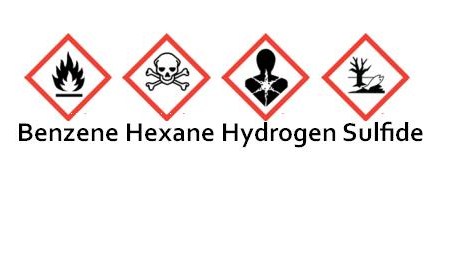
Now, imagine the cumulative effect of over 20,000 wells leaking 5% of their toxic gases! Most emissions escape during the initial drilling process, and according to one study, those living within half a mile of natural gas wells are at the highest risk for exposure. (2012 Colorado School of Public Health, University of Colorado – McKenzie, Witter, Newman, Adgate)
A recent study has found that oil & gas production in Weld County contributes 55% of the VOC’s (volatile organic compounds) that cause ozone pollution in the northern Colorado region, and for the past 2 years the air in Weld County has been out of compliance with federal standards for ground level ozone. (2013 Cooperative Institute for Research in Environmental Sciences – Gilman, et al)

As residents of Weld County and Greeley, we are surrounded with the consequences of this heavy industrialization every day. The latest project by Synergy Corporation proposes to add 12 horizontal wells and 25 condensate tanks to a site within 450 feet of the track at Northridge High School where students exercise. Is this responsible development?
Should we be risking the health of those who must live so close to this drilling?
We were given this beautiful planet to call our home, and we must be responsible stewards of this gift. A healthy environment is a safe home; let us be careful in making choices that might forever damage the precious air we breathe. I urge our city council to make decisions that not only protect the rights of mineral owners, but protect the quality of life for those of us living and breathing on the surface.
Thursday, August 15, 2013
French Film Crew in Greeley in Search of Fracking
"Would you want to meet with a french film crew, and help show them around? They want to do a film on fracking in Weld."
That was the message I found in my inbox yesterday. "Heck, yes! Of course I wanted to show them around! Let's get word and video out to the world beyond our city limits, and borders, of how dreadful the oil & gas installation infestation has become here! When was the last time we had a clear view of the mountains?
Unfortunately I forgot to take along my photo camera, and cannot show that I and two others actually did meet the crew. It was six o'clock when they finally arrived at the Kress theater where we'd been waiting for almost an hour. It turns out they'd been wandering around up north, near Grover!
After introductions I asked Herve and Pierre, "Did you see a lot of gas wells and oil tanks on the way here?" "Yes", Herve said, "but we want to see fracking" . "But that all is fracking!" I told them, but it turns out they wanted to see the actual process where the water goes in or comes back out. They were looking for a site with lots of trucks and compressors.
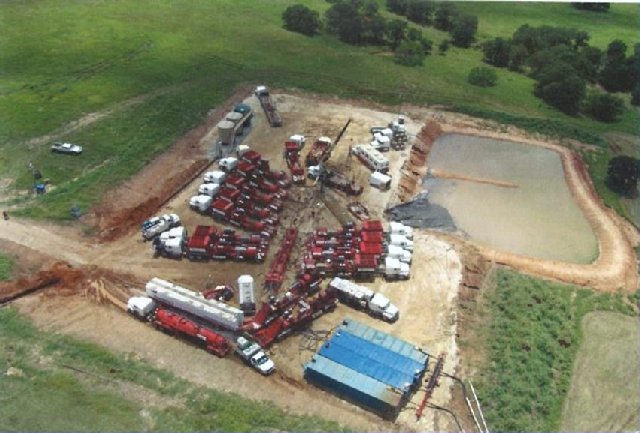
"No such thing going on around here for the moment," I told them. "Your best bet is to find active sites along U.S. 85". And so, after having spent just 10 minutes in our well infested city, they left again.
We thought they had wanted to see the various gas well sites near houses and water, but they were not interested in the effects after drilling and fracking is completed, and that it is the emissions from the installations that pose the largest and most immediate danger to people's health.
 |
| Near Riverside Park, Evans |

Granted, a field filled with trucks and compressors looks more impressive and obnoxious than the tanks and separators neatly painted in sand color to blend into the surroundings, but it is precisely these that are dangerous and noxious, and remain so! The fracking process is bad and poses real hazards, but let's not forget that after fracking, residents will still be inhaling noxious fumes!
Thursday, August 8, 2013
Residents Against More Wells Near School And Houses
Weld Air and Water joined 15 Greeley residents in filing an appeal this week to stop increased drilling within a high residential neighborhood, adjacent to Northridge High school, and on a ridge that slopes into the Sheep Draw waterway and wetlands. The proposal would add a twelve-well horizontal “fracking” operation on a site which already has six vertical wells.
The application by Synergy Resources Corporation was approved by the Planning Commission on July 23rd and has been scheduled for a public hearing before Greeley City Council on September 3rd. If approved, the application would allow for 25 condensate oil and gas tanks, 7 water tanks for flow-back water, and 17 separators; in addition to equipment (flares) to reduce the volatile organic compounds emitted.
Neighborhood resident, Sara Barwinski explains,
Weld Air and Water is encouraged that the City Council passed a petition on July 16 to take a closer look at the impacts of these fuel storage tanks in neighborhoods and whether there should be restrictions in the number allowed.
Patricia Gonzalez, a neighbor in the immediate vicinity explains,
Gilbert continued,
OIL AND GAS ACCIDENTS IN THE NEWS
Large tank batteries have come under greater scrutiny because of a serious explosion at a natural gas drill site on July 7 in West Virginia—two people died and five others were injured. The accident is under federal and state investigation. The company that operates the drill site, Antero Resources, claims in its report issued by the West Virginia Department of Environmental Protection, that the cause of the blast was a buildup of gas in tanks used to store flow back water from the process of preparing the well for natural gas production.
The flow back process occurs during high-volume horizontal hydraulic fracturing—in which millions of gallons of water and chemicals are pumped deep underground to release natural gas from shale rock. According to the West Virginia Gazette, Antero said the accident was due to “the presence of an accumulation of gas from storage tanks on location.” The company also blamed “a concentration of heavier than methane hydrocarbons in the gas mixture” and “an apparent ignition source near” near the operation.
The Chemical Safety Board (CSB), a federal agency, is encouraging local and state governments to take steps to protect young people from dangerous tank batteries related with oil and gas development. On October 31, 2009, two teenagers, aged 16 and 18, were killed when a storage tank containing natural gas condensate exploded at gas production site in Carnes, Mississippi. Six months later a group of youths were exploring a similar tank site in Weleetka, Oklahoma, when an explosion and fire fatally injured one individual. Two weeks later, a 25-year-old man and a 24-year-old woman were on top of an oil tank in New London, Texas, when the tank exploded, killing the woman and seriously injuring the man.
The CSB deployed investigators to all three sites to collect information on the incidents. They concluded: “The introduction of an ignition source (such as a match, lighter, cigarette, or static electricity) near tank hatches or vents can trigger an internal tank explosion, often launching the tank into the air and killing or injuring people nearby, the CSB found in its October 2011 study of the problem. The study identified a total of 26 incidents since 1983 that killed 44 members of the public and injured 25 others all under the age of 25.
The CSB’s safety recommendations urged states, standards organizations, and trade associations, to take action to protect members of the public – particularly children and young adults – from these hazards.” For more information and a video on the risks to teens see Oil Site Safety. Synergy has stated that it believes that teen vandalism may have caused one of its gas wells near Mead to vent natural gas at 2:00am at a rate that sounded like “a giant over-sized air compressor” according to a neighbor. Source: Greeley Tribune in Brief, SHERIFF’S OFFICE INVESTIGATES POSSIBLE TAMPERING AT MEAD-AREA GAS WELL, Greeley Tribune July 27, 2013.
The application by Synergy Resources Corporation was approved by the Planning Commission on July 23rd and has been scheduled for a public hearing before Greeley City Council on September 3rd. If approved, the application would allow for 25 condensate oil and gas tanks, 7 water tanks for flow-back water, and 17 separators; in addition to equipment (flares) to reduce the volatile organic compounds emitted.
 |
| What the site may look like during the drilling and fracking process. |
Neighborhood resident, Sara Barwinski explains,
“What really concerns us is the massive increase of heavy industrialization on the site. This size of industrial complex is simply not appropriate next to a school and near homes. We are not calling for a ban on existing operations—we are just asking for balance, and for the city to apply their own criteria that requires new applications to be compatible with surrounding land uses.”Therese Gilbert with Weld Air and Water (WAW) agrees.
“Weld Air and Water became involved because we want to help Greeley understand the options they have to restore sanity in planning around oil and gas decisions. City Council members and City Staff have stated that because Greeley lost the effort to ban oil and gas drilling back in 1992 that they have “no choice” but to approve any and all requests to drill. This simply is not true.”The appeal by neighbors and Weld Air and Water outlines legal arguments and suggests that Greeley adopt regulatory approaches that are commonly used by other local governments throughout Colorado. According to Gilbert,
“Greeley needs to strike a better balance between the goals of the oil and gas industry and the health, safety and welfare of Greeley residents.”The group believes there are hopeful signs that Greeley residents and leaders are seeing a need for more balanced decision-making.
Weld Air and Water is encouraged that the City Council passed a petition on July 16 to take a closer look at the impacts of these fuel storage tanks in neighborhoods and whether there should be restrictions in the number allowed.
“We don’t think the City should move forward with this application until that analysis has occurred,” Barwinski stated.Susan Rutherford is one of the nearest neighbors to the site. Last spring her entire neighborhood woke to a loud, shrill noise at 3:00 in the morning.
“I finally was able to figure out that it was coming from the oil and gas site because I could see a smoky cloud and the air smelled like a hot furnace,” Rutherford stated.She called 911 and the whole operation was soon shut down. She was informed by the operator that the problem was a faulty gas pressure release valve. Rutherford believed the problem should have been caught by more frequent inspections.
“There had been periodic unexplained noises going on all day long before it finally reached that critical point. ..How can anyone believe that approving that kind of danger is protecting our health and safety?”Residents are also upset that the city has ignored the impacts that enlarging this industrial complex would have on the Sheep Draw trail and wetlands, which has been home to bald eagles, horned owls, hawks and other wildlife.
Patricia Gonzalez, a neighbor in the immediate vicinity explains,
“We have already seen great impacts on wildlife caused from the existing wells. The day after the 3:00 am “wake-up call” incident, a pair of hawks abandoned their nest. I am also very concerned about the odors that have increased and the fact that I see less and less wildlife when I walk the trail..
This is an area that is considered of “high” ecological significance. It is zoned as a conservation district and is considered part of the Cache la Poudre River corridor. City code states: development should be rejected unless it would have ‘little or no impact’ on this area. An accidental spill will flow down-hill into this vulnerable watershed contaminating it.”Rutherford adds,
“Greeley and our concerned citizens are spending dollars and manpower to connect this beautiful part of the Sheep Draw to the Poudre River Trail in 2014—why wouldn’t we want to protect this investment?”WAW’s Gilbert is a teacher and shares a further concern,
“The track and field of Northridge High School is just over 400 feet from the well-heads, so our kids will be deeply inhaling the fumes when they exercise. I am also worried about the lack of security at this unmanned facility.”Synergy had an uncontrolled release in Mead last month that required an emergency response at 2:00 a.m. Synergy stated that it suspects that it was caused by teens tampering with equipment. This and other similar incidents around the country have persuaded Weld Air and Water to put forward a number of recommendations for conditions that should be attached to the permit, should the City Council decide to approve it
Gilbert continued,
“The 24/7 drilling, increased truck traffic, odors, dust and toxic emissions are clearly not ‘compatible’ with a neighborhood.”She pointed to the fact the City Council rejected a coffee-shop in a neighborhood last month because citizens’ voiced concerns about possible increased traffic and noise from the commercial facility.
“Our city government needs to understand that they have both the authority and the obligation to regulate the impacts of this heavy industry whose impacts are far worse than the impacts of a coffee shop.”The appeal argues that the site fails all of the City’s criteria for appropriate development and is not consistent with Greeley’s Comprehensive Plan for the future. Barwinski stated,
“If it was any other industry besides oil and gas they wouldn’t think twice about rejecting it. We want them to take the time to think through their legal options and their responsibility to Greeley citizens before making a decision that will impact us for decades to come.”
OIL AND GAS ACCIDENTS IN THE NEWS
Large tank batteries have come under greater scrutiny because of a serious explosion at a natural gas drill site on July 7 in West Virginia—two people died and five others were injured. The accident is under federal and state investigation. The company that operates the drill site, Antero Resources, claims in its report issued by the West Virginia Department of Environmental Protection, that the cause of the blast was a buildup of gas in tanks used to store flow back water from the process of preparing the well for natural gas production.
The flow back process occurs during high-volume horizontal hydraulic fracturing—in which millions of gallons of water and chemicals are pumped deep underground to release natural gas from shale rock. According to the West Virginia Gazette, Antero said the accident was due to “the presence of an accumulation of gas from storage tanks on location.” The company also blamed “a concentration of heavier than methane hydrocarbons in the gas mixture” and “an apparent ignition source near” near the operation.
The Chemical Safety Board (CSB), a federal agency, is encouraging local and state governments to take steps to protect young people from dangerous tank batteries related with oil and gas development. On October 31, 2009, two teenagers, aged 16 and 18, were killed when a storage tank containing natural gas condensate exploded at gas production site in Carnes, Mississippi. Six months later a group of youths were exploring a similar tank site in Weleetka, Oklahoma, when an explosion and fire fatally injured one individual. Two weeks later, a 25-year-old man and a 24-year-old woman were on top of an oil tank in New London, Texas, when the tank exploded, killing the woman and seriously injuring the man.
The CSB deployed investigators to all three sites to collect information on the incidents. They concluded: “The introduction of an ignition source (such as a match, lighter, cigarette, or static electricity) near tank hatches or vents can trigger an internal tank explosion, often launching the tank into the air and killing or injuring people nearby, the CSB found in its October 2011 study of the problem. The study identified a total of 26 incidents since 1983 that killed 44 members of the public and injured 25 others all under the age of 25.
The CSB’s safety recommendations urged states, standards organizations, and trade associations, to take action to protect members of the public – particularly children and young adults – from these hazards.” For more information and a video on the risks to teens see Oil Site Safety. Synergy has stated that it believes that teen vandalism may have caused one of its gas wells near Mead to vent natural gas at 2:00am at a rate that sounded like “a giant over-sized air compressor” according to a neighbor. Source: Greeley Tribune in Brief, SHERIFF’S OFFICE INVESTIGATES POSSIBLE TAMPERING AT MEAD-AREA GAS WELL, Greeley Tribune July 27, 2013.
Subscribe to:
Posts (Atom)